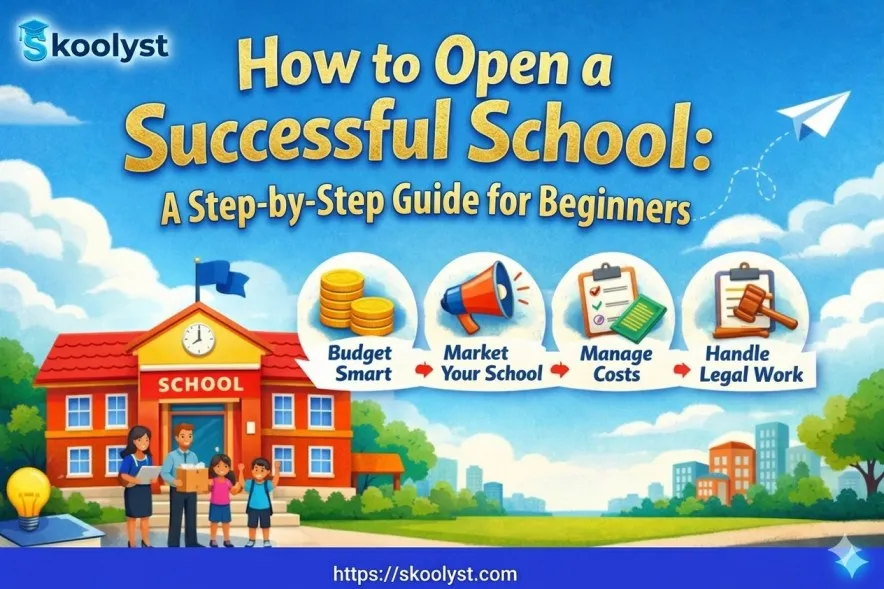
1. How to Start a School Without Sinking All Your Money Into It
Many people are very passionate about opening a school. Because of this excitement, they invest too much money at the beginning—without testing their idea. This often leads to financial loss.
Start Modestly (Start Small)
Instead of opening a big school with many classes:
- Start with limited classes
- Begin at a small level
- Learn from real experience
When you start small, you understand:
- Parents’ expectations
- Student behavior
- Operational challenges
This reduces risk and helps you grow step by step.
Rent, Don’t Buy
Buying land and constructing a building can cost millions or even crores.
Instead:
- Rent a suitable building
- Test whether parents are interested
- See if your school model works
Once you gain confidence and stability, then you can think about long-term commitment. Renting keeps your initial investment low and safe.
Go for Pre-Owned (Used) Furniture
Many schools shut down due to poor planning or financial issues. They often sell:
- Desks & chairs
- Boards
- Office furniture
- Lab equipment
You can:
- Contact such schools
- Buy items at very affordable prices
- Save a huge amount of money
Seek Grants & Plan for Growth
If your school grows up to Grade 10 or above, you will need significant capital.
So:
- Look for education grants
- Keep backup funds
- Plan finances in advance
A well-running school needs strong financial planning to avoid future crises.
Consider Joining a Franchise
If you don’t want to experiment too much:
- Join a school franchise
- Get curriculum, systems, branding, and guidance
- Reduce trial-and-error risks
Franchises help beginners learn faster.
2. Build Your Curriculum Without Spending a Fortune
Use Free Learning Materials
There are many:
- Free online tools
- Educational websites
- Open-source learning resources
You can use these to:
- Design lesson plans
- Support teachers
- Reduce content creation costs
Team Up with Colleges (Smart & Cost-Effective)
Instead of hiring expensive curriculum experts:
- Contact nearby B.Ed colleges or training institutes
- Give students a live project: create a unique curriculum
- Offer certificates or experience letters
Students get real-world experience, and you get a practical, innovative curriculum at low cost.
Recruit Fresh Minds (Young Teachers)
Many people hire very senior experts with high salaries. This increases cost heavily.
Instead:
- Hire young, energetic teachers (millennials & Gen Z)
- They are:
-
Tech-savvy
-
Fast learners
-
Creative thinkers
-
Build a small team:
- Create → Implement → Test → Improve
- Collect feedback and refine quickly
This approach saves money and creates a modern curriculum.
If you don’t want this hassle, again—a franchise is an option.
3. How to Promote Your School Without Expensive Ads
Marketing does not always mean paid ads.
Start With Your Own Circle
- Tell friends, relatives, neighbors
- Word-of-mouth is free and powerful
Use Social Media (Low Cost, High Reach)
Today, everyone spends time on mobile phones.
You can:
- Create school pages on Facebook, Instagram
- Share:
-
Activities
-
Values
-
Events
-
Student work
-
This builds trust without heavy spending.
Create Your School Profile on Skoolyst
List your school on Skoolyst.com:
- Parents actively search for schools there
- Millions of users can see your school profile
- Add photos, details, facilities, and updates
👉 This builds awareness and credibility at minimal cost.
Organize Community Events
Instead of only running “Admissions Open” ads:
-
Arrange events like:
-
Independence Day
-
Science fairs
-
Sports day
-
Cultural programs
-
When parents visit your school and see:
- Infrastructure
- Environment
- Teaching approach
They spread positive word-of-mouth naturally.
Talk to Local Newspapers (Smart PR)
Don’t just send press releases.
Think like a reporter:
- What is unique about your school?
- How are you helping the community?
- What new idea are you bringing?
Reporters want stories, not promotions.
You can also:
- Publish blogs and articles using Skoolyst’s blog feature
- Share school updates, events, and achievements
This often results in free media coverage.
4. How to Manage Monthly School Expenses Without Going Broke
Use Technology (ERP & Automation)
School ERP software can manage:
- Attendance
- Fees
- Communication
- Reports
Benefits:
- Fewer staff required
- Fewer mistakes
- Lower operational cost
Technology saves money in the long run.
Hire Part-Time Staff
Instead of full-time employees:
- Hire part-time accountants, admins, support staff
- Pay only for required hours
This significantly reduces salary expenses.
Use Volunteers (A Unique Advantage in Schools)
Schools have strong community support.
You can involve:
- Retired teachers
- Parents
- Grandparents
- Local professionals
- College students
They can help in:
- Teaching sessions
- Events
- Picnics
- Annual functions
- Mentorship programs
This kind of support doesn’t exist in other businesses—only in education.
5. How to Handle Legal Work Without Expensive Lawyers
Many people think:
“I must hire expensive lawyers and consultants.”
That’s not always true.
Seek Free or Pro-Bono Advice
Many professionals:
- Lawyers
- CAs
- Consultants
Are willing to help schools for free or minimal cost, especially community-based institutions.
Just ask within your network.
Do Your Own Research
Today, information is available online:
- Government portals
- Education department websites
- Forums and guides
You don’t need a law library—Google is enough to understand basics.
Collaborate With Other Schools
All schools face similar legal issues.
You can:
- Form a local school association
- Hire a shared lawyer
- Represent issues collectively
Benefits:
- Lower cost
- Strong voice
- Protection from individual targeting
Final Thoughts
Starting a school is not just a business—it’s a community-driven mission.
By:
- Starting small
- Controlling expenses
- Using technology
- Marketing smartly
- Collaborating with people
You can build a successful, sustainable school even without prior experience.
Platforms like Skoolyst are designed to support you—
from school listing and parent discovery to content sharing and credibility building.
💬 Please share your thoughts or questions in the comments below.
Your experience may help someone else start their dream school.



Comments (0)
Join the Conversation
Please log in to leave a comment and share your thoughts.
No comments yet
Be the first to share your thoughts!